
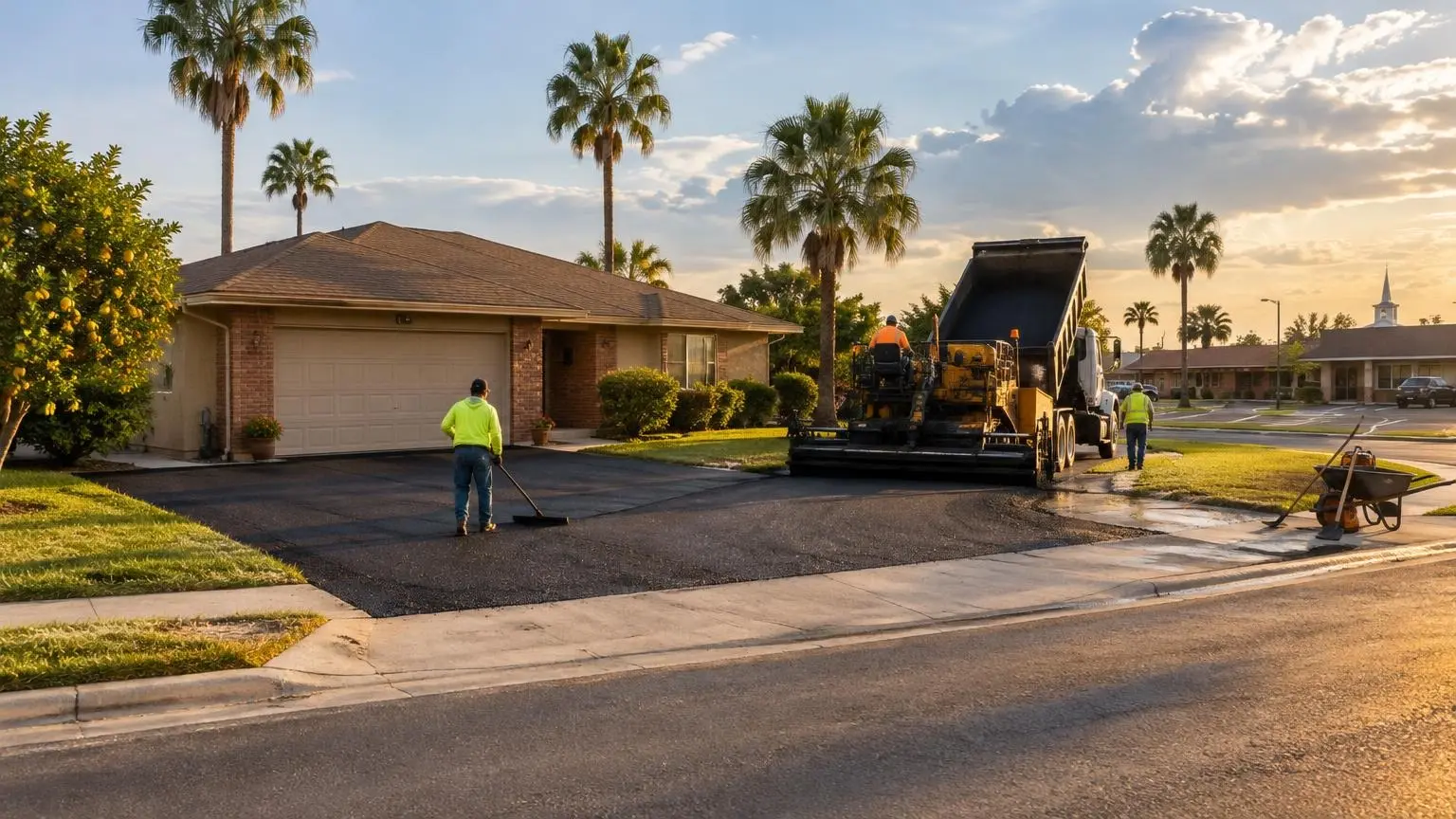
Driveway and lot sealing
Sealcoating in Edinburg, TX
A protective coat that slows the sun damage that turns Valley asphalt gray and brittle.
- Free on-site estimates in Hidalgo County
- Itemized written quote: base depth and asphalt thickness spelled out
- Paving and sealing timed around Valley heat and the September rains
Protection From the Sun
Sealcoating is a thin coat of liquid sealer spread over asphalt to protect the binder that holds it together. In Edinburg the main enemy is sunlight: with average highs near 97 degrees in July and August and strong sun most of the year, asphalt oxidizes, fades to gray and starts shedding small stones. Sealer slows that down and keeps water out of the surface. It does not add strength, and it does not fix a failed base, so it belongs on pavement that is still sound.
When to seal
New asphalt needs to cure first. HomeGuide recommends waiting 3 to 6 months after paving before the first seal, then resealing roughly every 2 to 10 years depending on the product and the climate. In strong sun, the shorter end of that range is more common. A practical sign is color: when the surface has gone gray and the aggregate shows, it is time.
Weather and scheduling
Sealer needs dry pavement and moderate temperatures to cure. HomeGuide gives a working range of 50 to 95 degrees, with most sealers needing 12 to 72 hours before cars can drive on them. In an Edinburg summer, that means early-morning starts so the sealer is not going down on pavement baking well past 95, and watching the forecast closely in September when storms build fast. Spring and late fall give the widest windows.
Preparation does most of the work
- Blowing and sweeping the surface, including dirt and grass along the edges
- Scraping and priming oil and transmission fluid spots so the sealer bonds
- Filling cracks first so the sealer is not just painted over them
- Cutting in by hand at garage slabs, walks and curbs
- Blocking off the area until it cures
Skipping prep is why some seal jobs peel within a season.
Sealer types
Most sealers are refined coal tar or asphalt emulsion. HomeGuide notes that coal tar resists fuel stains but has been banned in many places over health and environmental concerns, while asphalt emulsions are considered more environmentally friendly but stain more easily from gas and oil. We tell you which product we plan to use and why.
Commercial lots
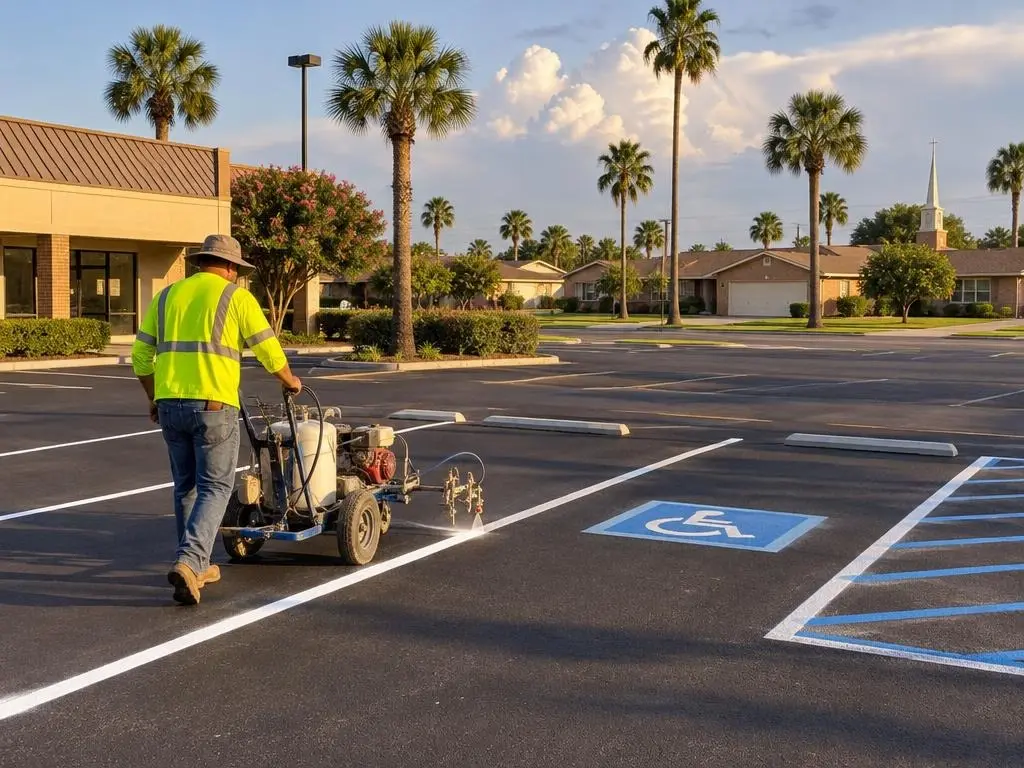
Lots are sealed in sections so part of the lot stays open, and the lines are restriped once the sealer cures. Because sealing covers the old striping, it is a good time to review the layout and accessible spaces.
Is your pavement ready to seal?
Sealing works on asphalt that is still structurally sound. If the surface is broken into alligator cracks, has potholes or sinks under foot, sealcoat will not hold it together. In that case we recommend repairs first and sealing afterward, or a resurfacing job if the damage is widespread. We will tell you honestly which situation you are in.
What This Covers
Cleaning, repair and coating, in that order.
Surface cleaning
Blowing, sweeping and edging so sealer bonds to asphalt, not dust.
Oil-spot priming
Stains scraped and primed so the sealer does not lift.
Crack filling
Cracks filled before sealing rather than coated over.
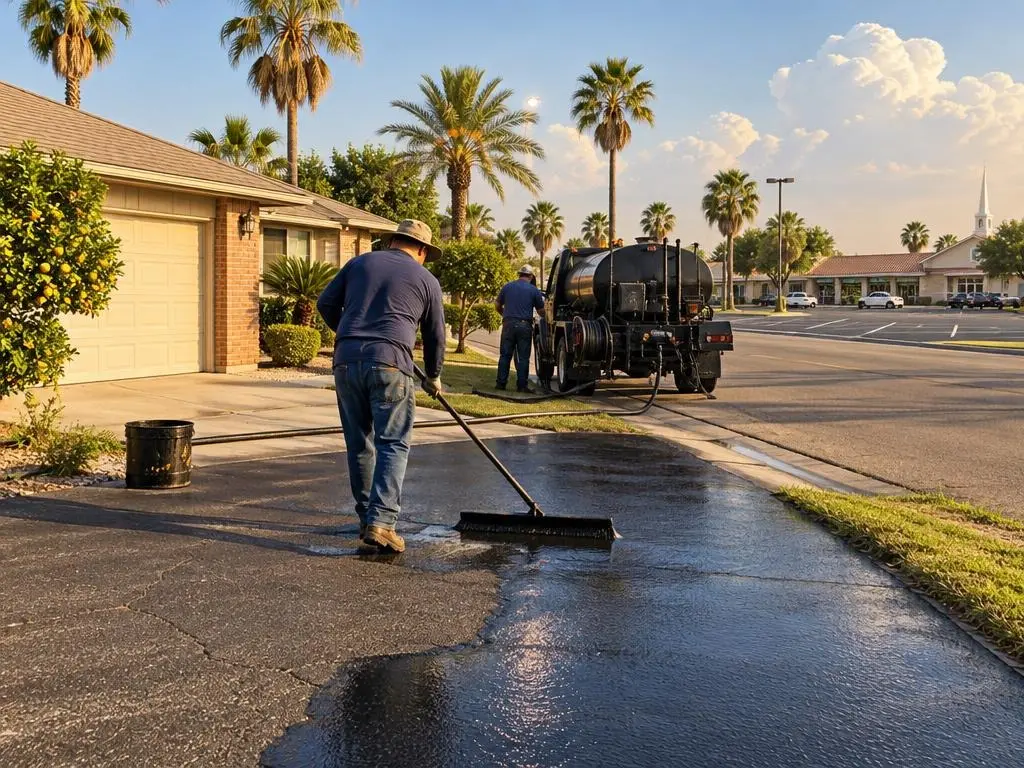
Sealer application
Applied by squeegee or spray, edges finished by hand.
Typical Sealcoating Costs
| Job | Published range |
|---|---|
| Driveway sealing, installed (HomeGuide) | $1 to $2 per sq ft |
| Two-car driveway, 20 x 20 ft (HomeGuide) | $400 to $800 |
| Three-car driveway, 24 x 36 ft (HomeGuide) | $860 to $1,700 |
| National average (HomeGuide) | About $600 |
| Parking lot sealcoating (HomeAdvisor) | $0.15 to $0.30 per sq ft |
Crack filling, patching and restriping are priced separately. National ranges from published cost guides; Rio Grande Valley pricing can differ. Your written estimate is the price.
How It Works
1. Inspect
We check that the asphalt is sound enough to seal.
2. Prep
Clean, prime oil spots and fill cracks.
3. Seal
Sealer applied in suitable weather, edges by hand.
4. Cure
Area blocked off until it is ready to drive on.
Sealcoating Questions
How often should I sealcoat in the Valley?
HomeGuide's range is every 2 to 10 years. With Edinburg's sun, many driveways need it toward the shorter end. Reseal when the surface fades to gray, not on a fixed calendar.
How long do I stay off a freshly sealed driveway?
Walking is usually fine after 1 to 3 hours. Cars generally wait 12 to 72 hours depending on temperature, humidity and shade.
Does sealcoat fill cracks?
No. Sealer is too thin and sinks into cracks. Cracks are filled first, then the whole surface is sealed.
Can you seal in the middle of summer?
Yes, early in the day. HomeGuide puts the working range at 50 to 95 degrees, so we avoid the hottest afternoon hours and any day with rain in the forecast.
Sealcoating Service Areas
- Asphalt Paving in Edinburg, TX
- Asphalt Paving in McAllen, TX
- Asphalt Paving in Pharr, TX
- Asphalt Paving in Mission, TX
- Asphalt Paving in San Juan, TX
- Asphalt Paving in Alamo, TX
- Asphalt Paving in Donna, TX
- Asphalt Paving in Weslaco, TX
- Asphalt Paving in Mercedes, TX
- Asphalt Paving in Hidalgo, TX
- Asphalt Paving in Elsa, TX
- Asphalt Paving in Edcouch, TX
- Asphalt Paving in Palmview, TX
- Asphalt Paving in La Joya, TX
- Asphalt Paving in Alton, TX
- Asphalt Paving in Sullivan City, TX
- Asphalt Paving in Peñitas, TX
- Asphalt Paving in Progreso, TX
- Asphalt Paving in Linn, TX
- Asphalt Paving in Hargill, TX
Get a Sealcoating Estimate
Free sealcoating estimates in Edinburg and Hidalgo County.